
DLR continue to select HySpex as hyperspectral instrument supplier

Norsk Elektro Optikk AS (NEO), a leading payload provider of high-performance hyperspectral imaging systems, has signed a contract with the European Space Agency (ESA) to complete the design and manufacturing of HyperNOR S-1280, the first spaceborne instrument in the HySpex HyperNOR family. The next-generation in-orbit hyperspectral demonstrator is designed to unlock the full potential of extended Short-Wave Infrared (eSWIR, 950–2500 nm) imaging from space.
The HyperNOR S -1280 instrument is being realised under ESAs General Support Technology Programme (GSTP), with support from the Norwegian Space Agency (NOSA). The contract enables a complete payload development pathway—from Qualification Model (QM) to Flight Model (FM), culminating in launch as an In-Orbit Demonstrator (IOD) in the first half of 2028. By combining qualification, flight readiness, and in-orbit validation within a single framework, GSTP accelerates the transition of HySpex’s proven hyperspectral sensor technology from airborne and laboratory domains into space, while reducing risk and establishing a robust foundation for future operational missions and constellations.
HyperNOR S-1280 represents a significant advancement in hyperspectral Earth observation. As an ESA-supported GSTP/IOD mission, it is designed to close the commercial eSWIR gap in space-based imaging, enabling a new generation of high-impact applications for downstream providers.
“The HyperNOR S-1280 represents a critical step forward in bringing high-quality, calibration-grade hyperspectral data into space,” says Lars O. Lierstuen, Head of Space & Business Development at NEO. “By combining high spatial resolution with robust eSWIR coverage, we are enabling continuity from lab to orbit and paving the way for next-generation hyperspectral constellations.”
In 2011 DLR purchased the HySpex cameras VNIR-1600 and SWIR-320m-e after a thorough examination of all the hyperspectral camera suppliers: https://www.dlr.de/eoc/en/desktopdefault.aspx/tabid-7218/12014_read-33083/
Although their existing equipment is still in use, NEO has now delivered a set of new cameras; the brand new HySpex VNIR-3000N and the HySpex SWIR-384.
DLR has been using HySpex cameras in numerous different applications from platforms in air, field, and in the lab:
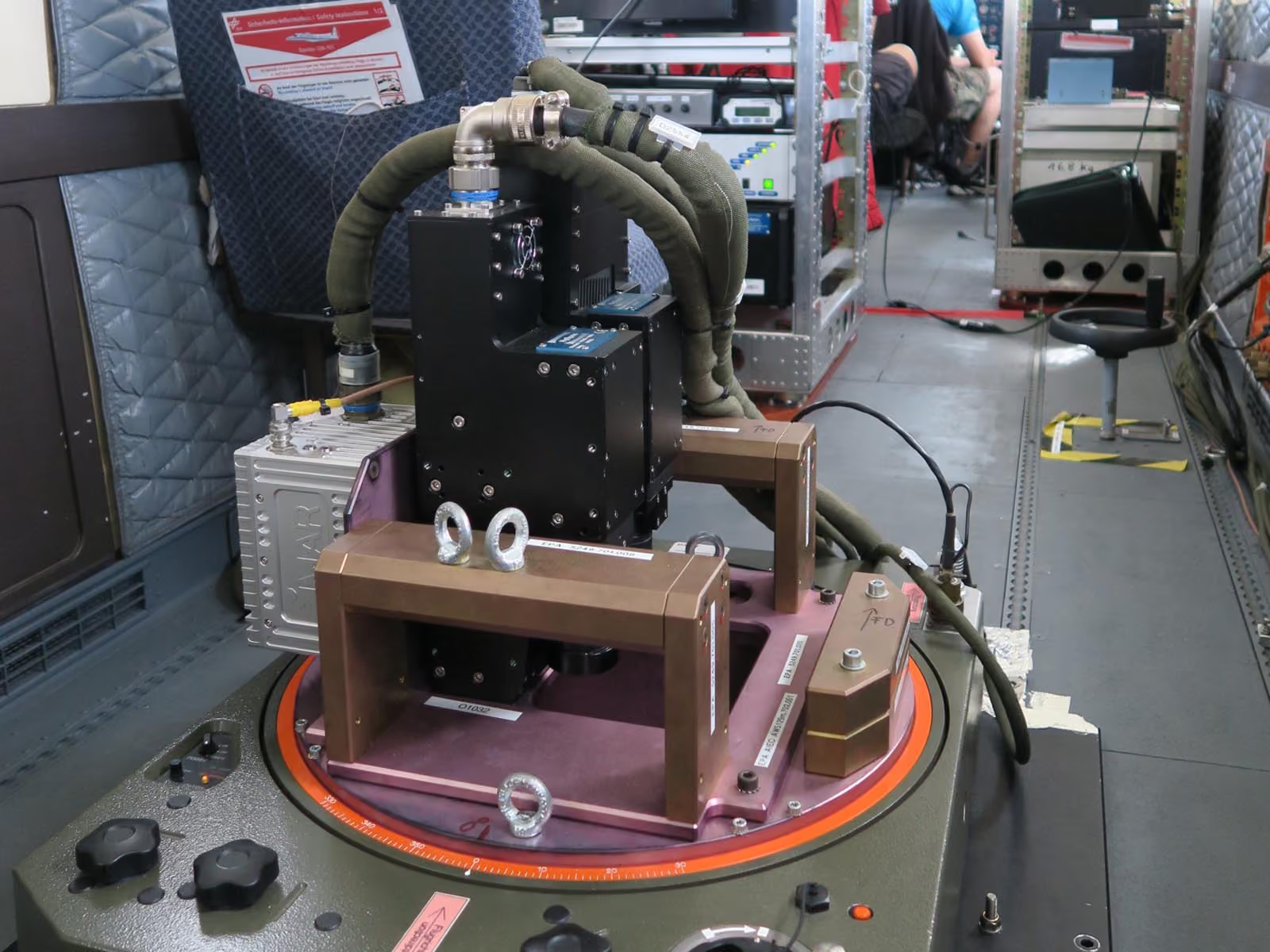
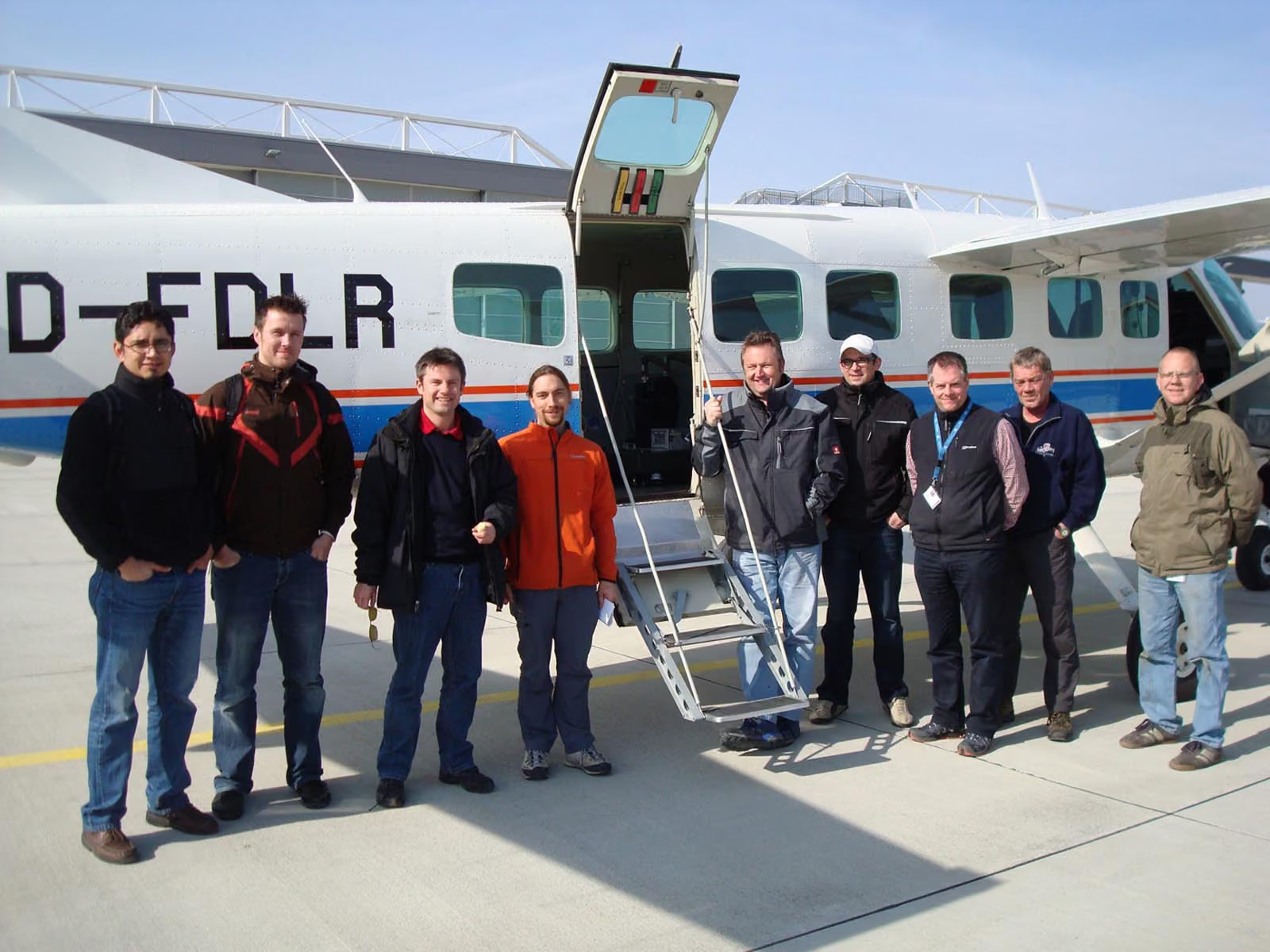
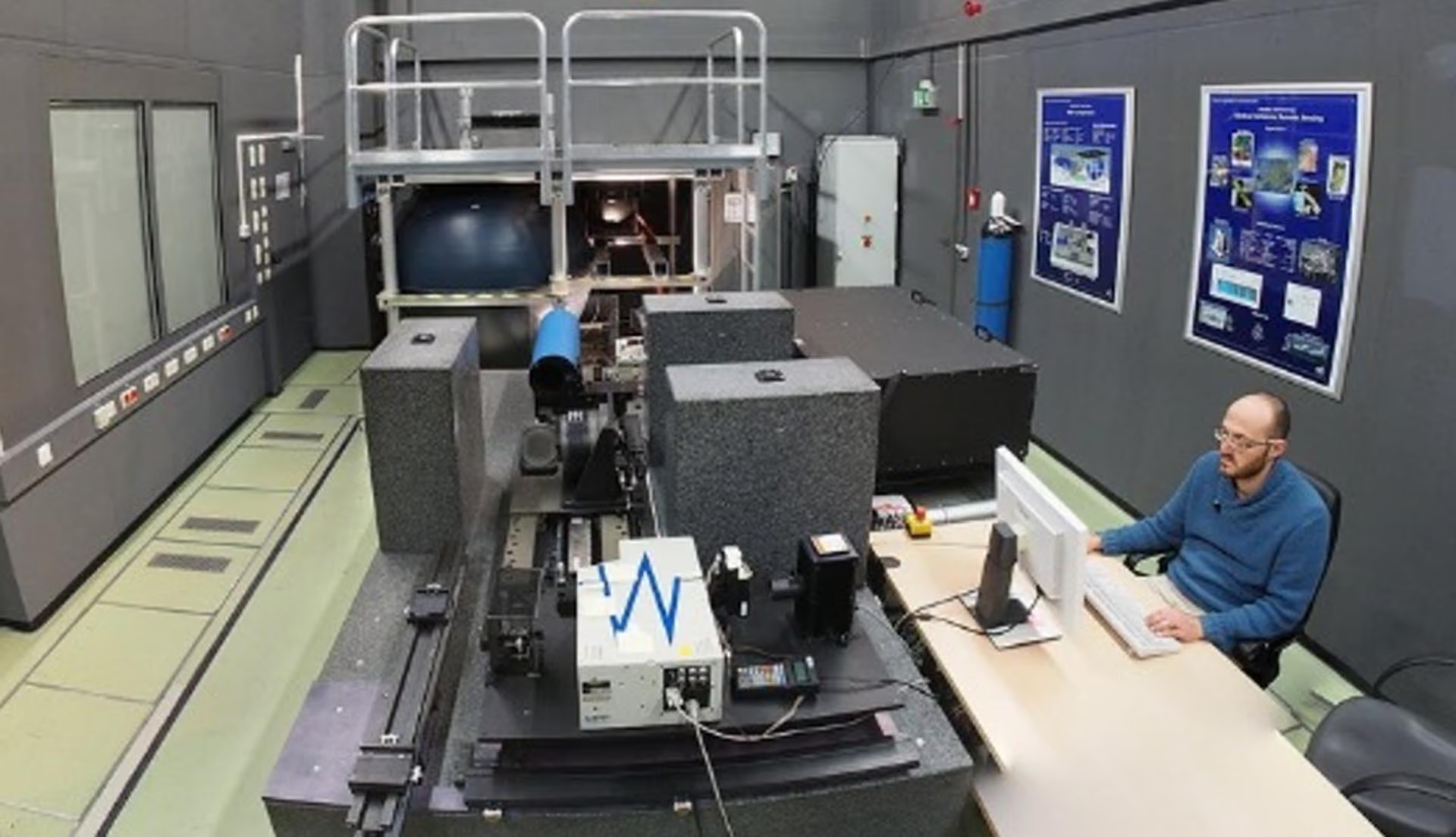
DLR with Andreas Baumgartner is chairing the characterization group of the IEEE P4001 project about making a standard for characterization hyperspectral cameras.
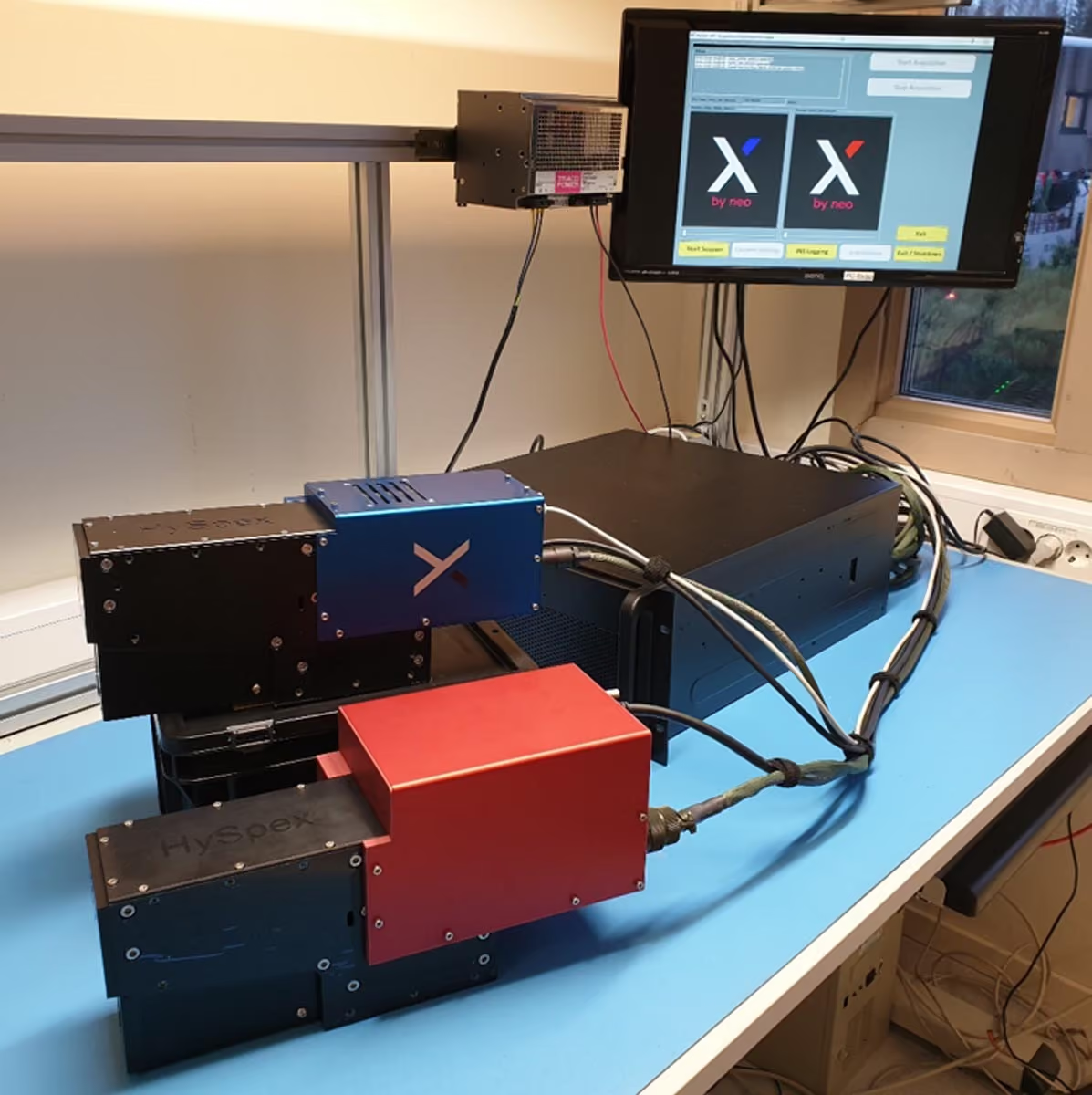
DLR has also published an article on their newly acquired equipment:
“DLR’s Earth Observation Center (EOC) recently upgraded its airborne sensor suite. In January DLR acquired two HySpex sensors (VNIR-3000N and SWIR-384) manufactured by the Norwegian company NEO. The two imaging spectrometers are going to be operated from 2020 onwards by the EOC user service Optical Airborne Remote Sensing (OpAiRS). OpAiRS conducts Earth observation missions for DLR research scientists and their cooperation partners. The sensor upgrade continues more than 25 years of tradition in airborne remote sensing. It strengthens DLR’s leading position within this field of research” Link to full article: https://www.dlr.de/eoc/en/desktopdefault.aspx/tabid-14195/24618_read-59900/
Over the last 8 years, the scientists at DLR have been working continuously with HySpex equipment, and have published a significant number of articles based on HySpex data: http://elib.dlr.de/id/saved_search/364